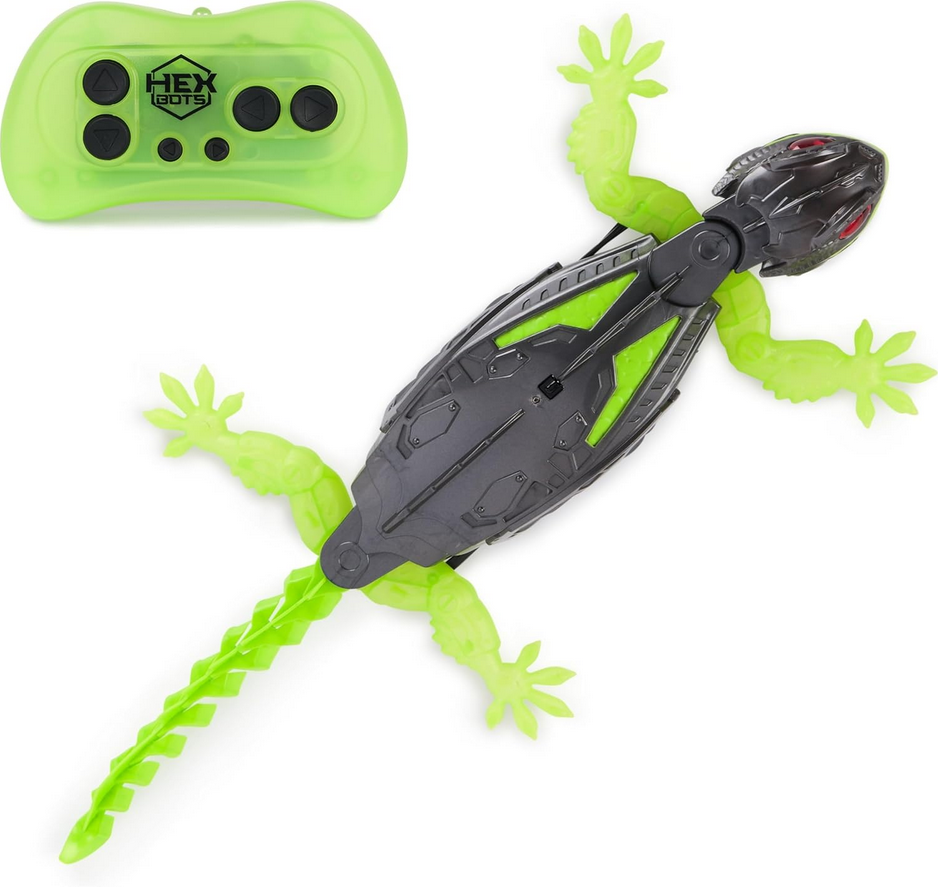
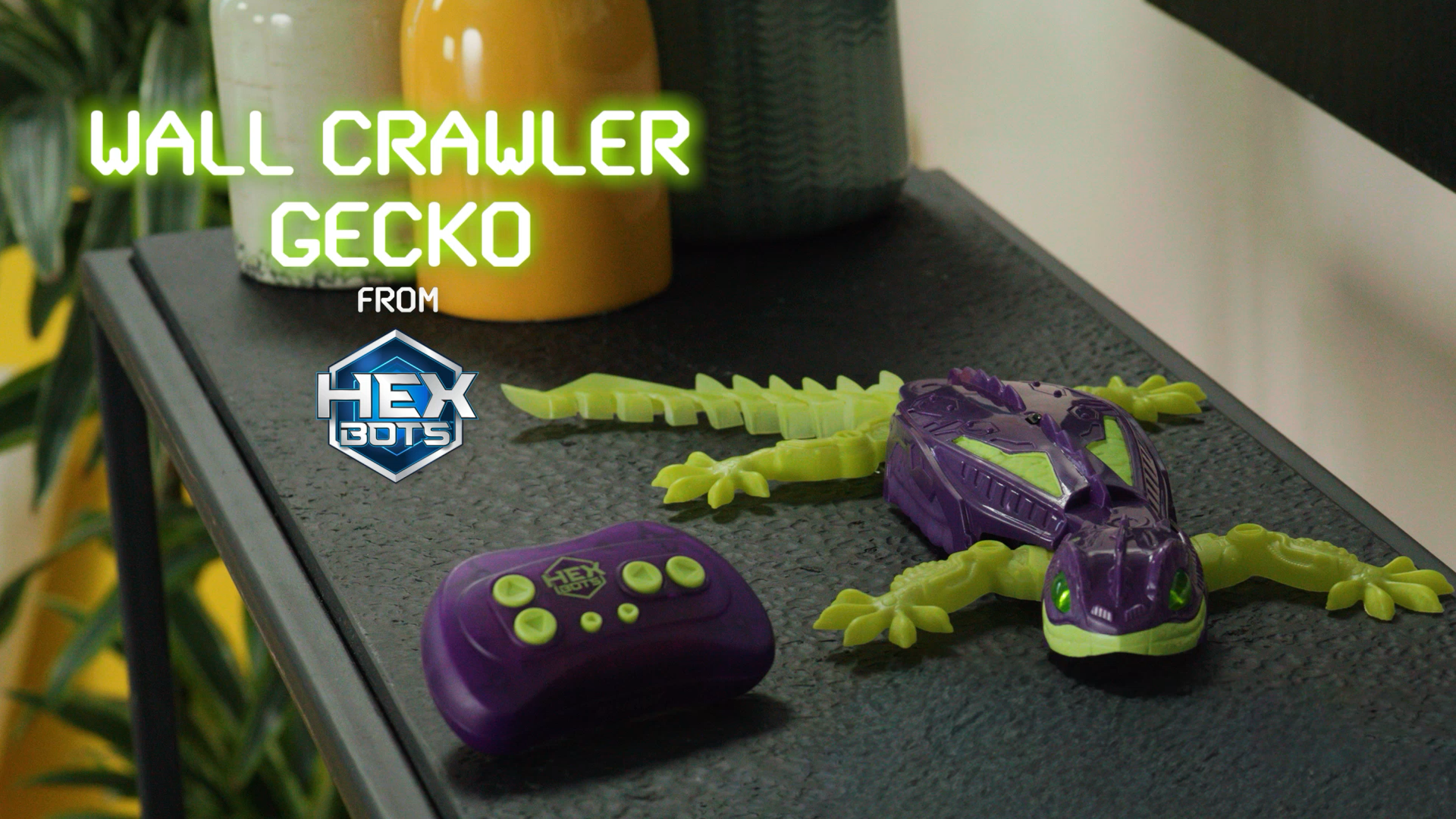
The Hex Bots Wall Crawler Gecko is a realistic wall climbing robot designed for safe indoor play, giving kids a gravity defying toy that sparks curiosity and imagination.
What Is the Hex Bots Wall Crawler Gecko and Why Is It So Popular?
This robot gecko is a rechargeable remote control toy that climbs smooth walls and ceilings indoors. It is created for kids aged four and up who enjoy unusual, science inspired play.
At its core, the Hex Bots Wall Crawler Gecko is a lightweight wall climbing robot in the shape of a gecko with LED eyes, a hard plastic body and flexible silicone limbs and tail. The toy moves across the floor and then transitions onto suitable walls, doors or tiles, which gives children a different perspective on their everyday room. A full function remote lets them drive forward, reverse, turn left and right and control the gecko within a range of about twenty five feet, or eight meters.
The design targets an age group that often moves from simple cars to more imaginative robots. Children who enjoy reptiles, science experiments or light prank scenarios tend to be especially engaged. Retailers and product descriptions also highlight the toy as part of a broader STEM leaning offering, with a science focus mentioned in several store specifications.
A quick overview of its standout features
The Gecko offers wall crawling, floor driving, LED eyes, a USB rechargeable internal battery and a separate remote control, all packaged in a compact reptile shaped body.
The visible headline features are the wall climbing movement, the illuminated eyes and the reptile form factor. Underneath, there is an internal rechargeable battery that is charged through the included USB cable, while the remote uses two AAA batteries supplied by the user. The combination keeps the robot itself cable free during play while keeping the remote simple. The package usually includes the Gecko, one remote, one USB charging cable and a printed instruction guide, so parents know what to expect when opening the box.
How Does the Gecko Actually Climb Walls?
The Gecko climbs walls by using a small internal fan to create suction against flat clean surfaces, which allows its lightweight body and silicone limbs to maintain grip indoors.
Inside the body, a fan pulls air and creates a pressure difference that helps the toy press gently against the wall. This effect, combined with a smooth relatively light shell and flexible limbs, enables the robot to cling to nonporous surfaces. Explanations of Hex Bots and similar wall climbers describe this principle as suction based technology rather than magnets or adhesives, which is consistent with how the product is positioned and how related wall climbing toys are described.
The science behind wall climbing technology explained simply
A controlled airflow under the toy lowers pressure near the surface, while the gecko weight and limb contact create enough friction to keep it in place as the wheels or legs move.
When the fan draws air, it produces a region of lower pressure between the toy and the wall. The difference between this low pressure zone and the surrounding air helps the robot stay close to the surface. The silicone feet and tail improve contact and reduce slipping. This approach resembles the way educational devices demonstrate suction climbers and is echoed in questions and answers that describe the gecko as using suction on nonporous surfaces.
Which surfaces work best for stable climbing?
The Gecko works best on flat clean nonporous surfaces such as painted walls, interior doors, glass and smooth tiles with minimal texture and dust.
The technology is designed for surfaces that are usually described as flat, clean and nonporous, which includes many indoor walls, windows and cupboard doors. Rough plaster, heavy texture, fabric, brick or dusty areas reduce the suction effect and can cause the toy to slip. Setting expectations around surface choice is one of the easiest ways to help a child see consistent climbing performance rather than unpredictable falls.
Why the Gecko sometimes fails to stick and how to fix it
Dust, uneven texture, gaps in paint or a low battery reduce suction. Cleaning the surface and fully recharging the Gecko usually restores stable wall climbing.
The user manual and multiple troubleshooting posts point to surface preparation and battery charge as key variables. A thin layer of dust can break the seal between the toy and the wall, while a battery that is not fully charged may not power the fan strongly enough for reliable suction. Wiping the wall with a dry cloth, charging the robot until its indicator shows a stable light and choosing a smoother area often solves the problem without any repair. Familiarity with this behavior allows parents to guide children rather than interpreting each slip as a defect.
Expert tip from Emma Ross, Product content specialist:
Show your child on one small section of wall that a cleaned area works better. This turns setup into a simple science experiment instead of a reason to feel upset.
Is the Gecko Safe for Kids, Walls, and Home Use?
Used on recommended indoor surfaces under adult supervision, the Gecko is designed for children aged four and up and for typical painted walls and furniture finishes.
The official age grading for this toy is four years and older, with standard warnings about small parts and remote batteries. Product descriptions specify an indoor use context, and the lightweight body combined with flexible silicone limbs and tail are intended to minimise impact on surfaces during normal play. As with most small remote control toys, supervision is especially relevant when younger siblings or pets are nearby, mainly to manage cables, batteries and the moving fan intake.
Materials and design that protect indoor surfaces
The Gecko uses a hard plastic body for structure and silicone limbs and tail to improve grip, which gives contact points that are smooth rather than sharp against walls.
Silicone is softer and more flexible than rigid plastic, which reduces the chance of scratches when it meets painted or glossy surfaces. The suction based system presses the toy toward the wall, but it does not rely on adhesives or hooks, so there is no need to peel anything off after use. No toy can be guaranteed to be compatible with every paint or wallpaper, yet the combination of a relatively low weight, smooth contact surfaces and non adhesive technology is chosen to fit common modern interiors.
Safety rules every parent should know
Basic rules are simple. Use the Gecko indoors, keep it on smooth nonporous surfaces, supervise charging and keep small parts and the fan intake away from hair and loose fabric.
The manual explains that the toy is not designed for outdoor use, wet environments or sand and dust. The remote requires two AAA alkaline batteries that should be installed by an adult and disposed of according to local regulations. The internal rechargeable battery should be charged only with the provided cable or a compatible USB port, away from flammable materials. Children should be reminded not to press their fingers, hair or clothing near the underside where the fan intake is located, similar to other small fan equipped devices.
How loud is the Gecko during wall play?
The wall climbing fan produces a constant whirring sound during operation, comparable to many small suction based wall climbing toys used indoors.
Video reviews and educational tear downs show that the fan creates audible noise while running, but not at the level of household vacuum cleaners or power tools. The character of the sound is more like a steady mid pitched whir combined with the motion of the drive mechanism. Families with pets may want to introduce the toy gradually, letting animals observe from a distance before bringing the Gecko closer during wall play.
How to Set Up and Use the Gecko Right Out of the Box
Initial setup usually takes a few minutes. Charge the Gecko, insert two AAA batteries into the remote, choose a clean smooth wall and switch into wall climbing mode.
The included instructions outline a straightforward sequence. The rechargeable battery inside the Gecko is charged through the supplied USB cable until the indicator changes from pulsing to stable, as demonstrated in official charging videos. The remote is powered by two AAA batteries, inserted with attention to polarity. Once both are ready, the on body switch is set to the appropriate mode for wall use, and the child can start with gentle forward motion on the floor before moving to the wall.
Step by step quick start guide
A simple routine works best. Charge fully, test movement on the floor, select a smooth wall, then drive slowly upward while keeping an eye on suction and steering.
Starting on the floor allows the child to understand the control layout and turning behavior. When both child and adult are comfortable, the Gecko is placed against a smooth wall, the fan is engaged, and gentle forward input lets it lock on before climbing higher. Short early sessions give time to notice any slipping or noise patterns and to make small adjustments to surface choice or charging habits. Over time, this sequence becomes automatic and reduces frustration.
Best play scenarios for maximum fun
The strongest experiences combine short climbing runs, simple routes around door frames and windows and light prank situations where the gecko appears unexpectedly in a doorway or on a wall.
Children often enjoy tracing vertical routes around posters, picture frames or light switches, provided the wall remains smooth and clean. Some families set up small routes that involve moving from floor to wall to a second surface, similar to obstacle trails used for remote control cars. Others lean into the prank angle by positioning the Gecko above a doorway before calling a family member into the room. Clear rules regarding consent and younger siblings help keep this type of play comfortable for everyone.
Charging, maintenance, and long term care tips
Regular cleaning of surfaces, consistent full charging sessions and safe indoor storage keep the Gecko fan, limbs and body in better condition over repeated uses.
The suction effect relies on both a functioning fan and clean contact points. Wiping silicone limbs with a dry cloth, occasionally cleaning the area around the fan intake and avoiding very dusty spaces maintain performance. The cable should be coiled loosely, and the toy should not be stored under heavy objects that could deform its body or limbs. These practices mirror common recommendations from user manuals for similar wall climbing devices and align with guidance for this specific product.
Expert tip from Daniel Moore, Toy safety consultant:
Agree at home where the Gecko is allowed to live on the walls. A clearly marked experiment zone reduces the risk of accidental marks on delicate surfaces.
How Does the Gecko Compare to Other Wall Climbing Toys?
Compared with wall climbing cars and generic gecko robots, this model combines suction based wall climber technology with a reptile form factor aimed at indoor STEM leaning play.
Spin Master uses the phrase Wall Climber Technology across its wall climbing lines, including Air Hogs Zero Gravity cars. Both cars and geckos rely on driving on smooth indoor surfaces, yet the experience differs. Cars emphasise racing and speed, while the gecko brings in animal like motion and a prank oriented theme. Generic wall climbers sold through marketplaces may advertise similar capabilities but often provide shorter descriptions and less formal documentation.
Gecko vs wall climbing cars
Gecko robots are shaped like animals with limb like contact points, while wall climbing cars focus on vehicles and speed and use the same underlying suction principle.
Wall climbing cars such as Air Hogs Zero Gravity Sprint are positioned for racing up walls and ceilings and are promoted with dynamic stunts and special controllers. The Gecko is described as a hyper realistic robot toy lizard with LED eyes that scurries rather than races. Families choosing between them will usually consider the child interests. Vehicles and races point to cars, while reptiles and more character driven play point to the gecko. Both options target similar age ranges and indoor environments.
Gecko vs generic gecko robots
Branded Hex Bots geckos are accompanied by a detailed manual and consistent specifications, while many generic wall climbing gecko toys provide less standardised documentation.
Marketplace listings for unbranded or lesser known gecko climbers often describe wall climbing action and suction but vary in terms of age labels, surface recommendations and support materials. The Hex Bots manual identifies the contents, safety guidance and operational steps under a consistent model number. For parents who care about clarity and traceability, this more structured documentation can be a deciding factor when comparing prices and promises.
Standard Gecko vs Glow in the Dark Gecko
The Glow in the Dark Gecko adds luminous body elements while retaining the same core wall climbing mechanism, age grading and remote control format.
Retail descriptions show the glow variant framed as scarier with a glow design that is visible in low light. Both versions use a hard plastic body, silicone limbs and tail, LED eyes and a USB charging system. For families playing mostly in brightly lit rooms, the standard model is sufficient. In darker playrooms or for evening sessions the glow body can make the gecko easier to spot and track on walls.
What Is in the Box and Who Is This Toy Best Suited For?
The package typically includes the Gecko robot, a full function remote control, a USB charging cable and an instruction guide aimed at indoor use from age four and up.
Retail listings and the official manual confirm that the core contents follow this pattern, sometimes with regional packaging differences in branding or artwork. The remote and robot arrive paired for immediate use after charging, and no additional proprietary accessories are required to start playing. Parents only need to provide suitable AAA batteries for the remote and a USB power source for charging the robot.
Who benefits most from this toy?
Children who enjoy reptiles, science, light hearted pranks and screen free indoor play tend to get the most long term engagement from the Gecko.
The product positioning around creeping out friends and family speaks directly to kids with a taste for mild surprises. At the same time, the STEM aspect appeals to those who like to ask why and how devices work. Parents who are comfortable discussing suction, pressure and friction can easily turn a short play session into a simple experiment by comparing how the gecko behaves on glass, paint and tile. The toy also suits households where play space is vertical rather than horizontal, such as smaller apartments.
When is this toy the perfect gift?
The Gecko fits well as a main or secondary gift for birthdays, holidays and themed events for children who already have standard cars and are ready for something more unusual.
Because it relies on indoor surfaces rather than outdoor terrain, it is especially suitable for colder seasons and holidays when children spend more time inside. It can also work as a shared gift between siblings if expectations around turn taking and safe use near younger children are established in advance. The packaging and visual design make it simple for relatives and family friends to see that it is not just another car, which helps bring variety into a child toy collection.
Realistic expectations: what parents should know
Performance depends on smooth clean nonporous surfaces and maintained battery charge, and occasional slips are normal behavior rather than a sign of failure.
The suction mechanism is sensitive to dust and texture, and troubleshooting guidance reflects this. Parents who understand that behavior will recognise the need for short checks before each session. A suitable surface, enough battery charge and clean limbs and underside are the key variables. Within these constraints, the Gecko delivers a repeatable experience that still feels surprising to new viewers.
Specification Sheet and Technical Details
This table summarises core specifications for the Hex Bots Wall Crawler Gecko based on published retail data and manuals.
| Feature |
Hex Bots Wall Crawler Gecko |
| Product type |
Rechargeable wall climbing remote control robot toy in gecko form |
| Recommended age |
4 years and up |
| Power for robot |
Internal rechargeable battery with USB charging cable included |
| Power for remote |
2 AAA alkaline batteries provided by the user |
| Remote range |
Up to approximately 25 feet or about 8 meters |
| Approximate dimensions |
Package size around 11 inches high, 12.88 inches wide and 2.5 inches deep |
| Materials |
Hard plastic body and silicone limbs and tail |
| Movement modes |
Floor crawling and wall climbing on suitable indoor surfaces |
| Recommended surfaces |
Flat, clean, nonporous indoor surfaces such as painted walls, tiles, glass and interior doors |
| Included in box |
One Gecko robot, one remote control, one USB charging cable and one instruction guide |
Comparison Table: Gecko vs Popular Wall Climbing Alternatives
This table contrasts the Gecko with a branded wall climbing car and a typical generic wall climbing gecko toy based on public descriptions.
| Parameter |
Hex Bots Wall Crawler Gecko |
Air Hogs Zero Gravity wall climbing car |
Generic wall climbing gecko toy |
| Form factor |
Animal shaped gecko robot with LED eyes |
Racing style remote control car |
Usually lizard shaped body, details vary |
| Brand and documentation |
Spin Master Hex Bots line with detailed manual |
Spin Master Air Hogs line with long standing presence |
Brand and manual quality vary between listings |
| Technology description |
Suction based wall climber for indoor surfaces |
Wall climber technology for walls and ceilings |
Often described as suction based, detail is limited |
| Recommended age |
4 plus |
4 plus |
Often 3 plus or 4 plus depending on seller |
| Surface guidance |
Flat, clean, nonporous indoor surfaces specified |
Smooth walls, floors and ceilings promoted |
Surface guidance may be brief or generic |
| Educational framing |
Often tagged with science and STEM focus |
Framed around racing and stunt play |
Education focus rarely mentioned explicitly |
Inside the Wall Climber Lab
This toy family has been examined in science outreach projects and tear down videos, which reveal several details that rarely appear on standard product pages.
One less obvious point is that the suction system is highly sensitive to small changes in wall flatness. Even minor bumps or recessed filler can interrupt the airflow pattern enough to reduce grip, which explains why some spots on the same wall work while others do not. Another detail is that the fan intake and internal channels are designed to balance suction strength and battery consumption. Stronger suction would hold more firmly but would drain the battery more quickly and increase noise, so engineers choose a middle ground that fits short indoor sessions.
A third nuance comes from educational demonstrations where engineers show that a thin film of dust or fibres can be more disruptive than visible marks. Because suction relies on direct contact, a very light layer of particles can act as spacing between the toy and the wall, which makes the seal uneven. This matches user reports that wiping a surface with a dry cloth improves performance more than simply choosing a different wall. A fourth observation from tear downs is that the body shell often includes internal ribs and supports that keep the fan and drive components stable during vertical operation and reduce vibrations that might otherwise break the seal or create unpredictable movement.